





Fiber optic cable - optical sensors - spectroscopy - photonics - uv vis spectroscopy - biomedical equipment technology : Avantes
The avantes website contains frames, unfortunately your browser doesn't support frames.
Because of this, you can't see the full Avantes website.
You can follow these links to view some parts of our
website:
www.avantes.com/home.htm
www.avantes.com/frametitel.htm
www.avantes.com/framecontents.htm
Fiber optic cable, optical sensors, spectroscopy, photonics, uv vis spectroscopy, biomedical equipment technology, avantes, uv spectroscopy, fiber optics, spectroscopy system, fiber optic connector, fiber optic multiplexer, spectral instruments, absorbance, light sources, NIR, optical fibers, optical fiber solution, optical sensing, optical sensors, photonics, probes, process control, spectrometer, spectrophotometers, ultra violet,
uv-vis, spectral products, light transmission, luminescence, mobile spectrometer
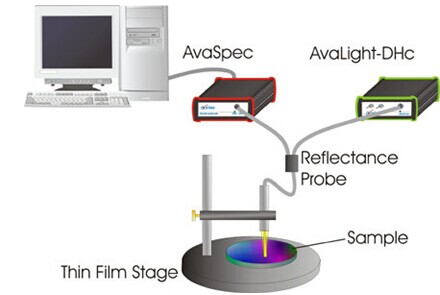
Avantes Advances Thin-Film Measurement
Our new catalog 2003 second edition including
our new light-sources is now available! Please do not hesitate to contact us for a
free Catalog
Visit us at our booth on one of the following tradeshows: sensor 2003, Achema
2003, Laser
2003. Contact us for free entrance tickets!
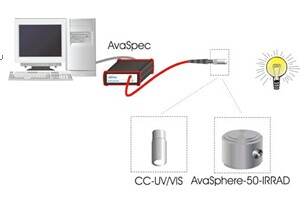
Irradiance, Bio medical
Avantes is
producing, developing and selling products in the field of fiber optic
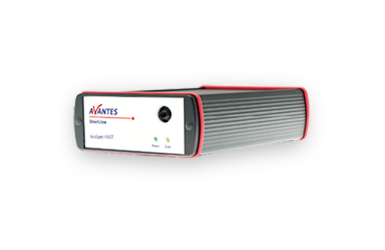
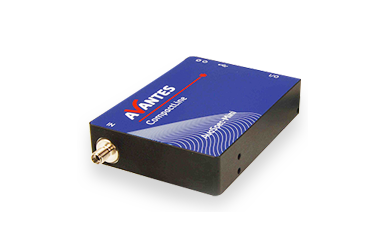
spectroscopy, such as spectrometers, light sources, fiber optic multiplexer,
fiber optic cables, software, fiber optics,
accessories and special applications.
With more than 10 years experience in
the
field of fiber optic spectroscopy, new applications can be realized, for example
in the industrial, chemical, biomedical, semiconductor, food-processing and many
other fields.
The Avantes
worldwide distribution network consists of more than 25 distributors in over 20 countries. The local distributors will support your custom specific
applications with their long-time experience and know-how.
The avantes website contains frames, unfortunately your browser doesn't support frames.
Because of this, you can't see the full Avantes website.
Please
contact your local distributor for a complete Avantes catalog or look at
on-line catalogue to be updated for the newest information.
How
to find us
Fiber optic cable - optical sensors - spectroscopy - photonics - uv vis spectroscopy - biomedical equipment technology : Avantes
absorbance, avantes, fiber optics, fiber,
fibers, fluorescence, handheld, irradiance, light sources, multiplex, NIR,
optical fibers, optical sensing, optical sensors, optics, photonics, probes,
process control, reflection, spectrometer, spectrophotometers, spectroscopy,
spektrometer, thin film, transmission, ultra violet, UV-VIS, wavelength
Avantes is producing, developing and selling products in the field of fiber
optic spectroscopy, such as spectrometers, light sources, software, fiber,
fiber optics, accessories, multiplexer, probes, handheld spectrometers and
special applications.
With more than 10 years experience in
the
field of fiber optic spectroscopy, new applications can be realized, for example
in the industrial, chemical, biomedical, semiconductor, food-processing and many
other fields.
The Avantes
worldwide distribution network consists of more than 25 distributors in over 20 countries. The local distributors will support your custom specific
applications with their long-time experience and know-how.
Introduction Fiber Optic Spectroscopy
Optical
spectroscopy is a technique for measuring light intensity in the UV-, VIS-, NIR-
and IR-region. Spectroscopic measurements are being used in many different
applications, such as color measurement, concentration determination of chemical
components or electromagnetic radiation analysis. For more elaborate application
information and setups, please see further the Application chapter at the end of
this catalog.
A
spectroscopic instrument generally consists of entrance slit, collimator, a
dispersive element, such as a grating or prism, focusing optics and detector. In
a monochromator system there is normally also an exit slit, and only a narrow
portion of the spectrum is projected on a one-element detector. In
monochromators the entrance and exit slits are in a fixed position and can be
changed in width. Rotating the gratingscans the spectrum.
Development
of micro-electronics during the 90’s in the field of multi-element optical
detectors, such as Charged Coupled Devices (CCD) Arrays and Photo Diode (PD)
Arrays, enabled the production of low cost scanners, CCD cameras etc. The same
CCD and PDA detectors are now used in the Avantes line of spectrometers,
enabling fast scanning of the spectrum, without the need of a moving grating.
Thanks
to the need for fiber optics in the communication technology, low absorption
silica fibers have been developed. Similar
fibers can be used as measurement fibers to transport light from the sample to
the optical bench of the spectrometer. The easy coupling of fibers allows a
modular build-up of a system that consists of light source, sampling accessories
and fiber optic spectrometer.
Advantages
of fiber optic spectroscopy are the modularity and flexibility of the system.
The speed of measurement allows in-line analysis, and the use of low-cost
commonly used detectors enable a complete low cost Avantes spectrometer system.
Introduction Light Sources
Illumination
light sources are needed for transmission, absorption and reflection
spectroscopic setups. For the convenient coupling of the light into our
range of fiber optic cables, bundles and probes it is necessary that the
light is collected and can be coupled through SMA-905 connectors. Avantes
offers different light sources for the different applications and
wavelength ranges, as can be seen in the table 5. Tungsten Halogen light
sources are mostly used for the visible range to do color measurements.
The halogen light source provides a very stable output and has a lifetime,
depending on the color temperature of the bulb. The high stability of the
halogen light sources enables the use as color reflection illumination
source or as irradiance calibration light source. The most important
feature of the halogen light is that the spectral output is smooth and
monotonic without spikes or dips.
Introduction Fiber Optics
The use of fiber optics as light guidance allows
a great modularity and flexibility in the setup of an optical measurement system.
Optical fibers can be made of many materials, such as plastic, glasses and
silicates (SiO2). For high quality fiber optics, as used in spectroscopic
applications, synthetic fused silica (amorphous silicon dioxide) is used, that
can be intentionally doped with trace elements to adjust the optical properties
of the glass.
The basic principle of light transport through an
optical fiber is total internal reflection. This means that the light within the
numerical aperture of a fiber (NA = input acceptance cone) will be reflected and
transported through the fiber. The size of the numerical aperture depends on the
materials used for core and cladding.
Two basic types of silica fibers can be
distinguished; singlemode and multi-mode fibers, depending on the propagation
state of the light, traveling down the fiber. For most spectroscopic
applications multi-mode fibers are used. Multi-mode fibers can be divided into 2
subcategories, step-index and graded-index. A relatively large core and high NA
allow light to be easily coupled into the fiber, which allows the use of
relatively inexpensive termination techniques. Step-index fibers are mainly used
in spectroscopic applications.
Graded-index multimode fibers have a refractive
index gradually decreasing from the core out through the cladding. Since the
light travels faster in material with lower refractive index, the modal
dispersion (amount of pulse-spreading) will be less. These graded-index fibers
are mainly used in telecommunication application, where bandwidth at long
distance (2-15 km) plays an important role.

KwMap.net - browse the Keyword Map of Avantes.com
last updated 25-11-04